The
Shortest Distance Between Two People Is A Feeling Word
The
Shortest Distance Between Two People Is A Feeling Word
 |
GAMES |
|
VIDEOS |
|
EFFECTIVE
PARENTING |
|
PRIVATE
PRACTICE |
|
WORKSHOPS |
Morning
Glory Treatment Center
for Children
© Copyright 2020
1207 Pigeon Forge Road,
Pflugerville, Texas, 78660 USA
Phone/FAX : 512-251-3298
|
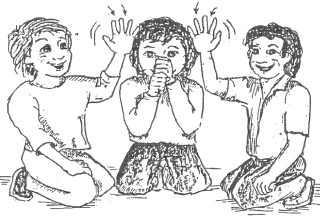
OBJECTIVES • Increase attention span SUPPLIES No supplies needed! However, there should be at least 6 players. This therapeutic game works well for even larger groups of children too. INSTRUCTIONS The children sit in a circle. The facilitator begins by sitting in the center of the circle and demonstrates how each animal is made. After all the children have had a turn being the "elephant,” then the group can learn and practice making a "rabbit” and then a "raccoon.” To start, the facilitator points to any child they wish and calls out one of the three animals, e.g., "Elephant." and quickly counts "1,2,3,4,5." (If the players have learning disabilities, you may increase the time by counting to 10.) As quickly as possible, the selected child makes the elephant trunk with two fists in front of his nose. (see picture.) The child sitting to the immediate right and left of the chosen child add the correct specific animal ears (Note: this means the child on the left will use their closest hand to make the ear, which is their right hand, and visa versa for the child on the right). All three children attempt to complete the addition of their animal body-part before the person who is "it" stops counting. The player who takes the longest or does the wrong body part, then has to be "it." This child should quickly select and point to another child while calling out the name of an animal of his choice. The instructions to form each animal are as follows:: ELEPHANT RABBIT: RACOON: The challenge and excitement of the game comes when the group knows how to make all three animals and the child who is "it" can choose any animal to catch the players off guard. For an even harder challenge, allow “it” to name two animals by pointing at one child and call "elephant" and then turn quickly around and point at another child and call a different animal such as "rabbit." This is especially hilarious to watch as all the players move their arms and hands in all directions. |
If the children are slow learners, they may need more time to remember the way an elephant is made (two hands in front of the nose as a trunk; two flapping hands for ears). If so, the count could be extended to 10. On the other hand, the count could be shortened to 3 for speedier players like adolescents. The facilitator should begin this game with a slower "practice round" where they sit in the circle to begin with and coach the children on how to play it, being sure to give each child a chance to practice. The facilitator can model good sportsmanship and can provide a contagious spirit of enthusiasm for the children through active participation! The facilitator can promote adaptability by changing the animals when the children just "get the hang of it". To transition to another animal, it is best to present it is a "challenge" to them to see if they "can get it." This is an exciting therapeutic game.
Register to use the PayPal shopping cart with your credit card.
|